
FILMMAKER SUCCESS BLOGS
Explore expert insights on the business of filmmaking, including film funding, marketing, and distribution, and career strategy for independent filmmakers.

It's the Season of Giving: Why Q4 Is the Best Time for Filmmakers to Raise Money
It's the Season of Giving: Why Q4 Is the Best Time for Filmmakers to Raise Money
It’s early October 2026. The fourth quarter has begun. And we are officially entering the season of giving.
That is good news for filmmakers.
Yet I can already hear the objections:
> “Everyone’s broke until January.”
> “Nobody wants to talk about money in December.”
> “The holidays are the worst possible time to raise money.”
But here is the truth: nonprofits know the opposite is true.
The final quarter of the year is traditionally one of the busiest and most productive fundraising periods for nonprofits. They don’t stop asking because the holidays are approaching. They build their campaigns, tell their stories, contact their donors, and continue asking.
And that is exactly what filmmakers need to do.
If you want to secure film funding and independent film financing, you need to complete your project in 2027; now is the time to roll up your sleeves.
Not in January.
Now.

What Can Filmmakers Learn from Nonprofit Fundraising?
According to Donorbox’s year-end giving statistics, December accounts for approximately 37% of the average nonprofit’s annual online revenue.
That is a significant share of annual online fundraising concentrated into one month.
Donorbox also reports that:
The final week of the year brings in approximately 10% of annual online revenue.
December 31 alone accounts for approximately 4% of annual online revenue.
To be clear, these figures are nonprofit online-revenue figures, and they are nested: the 4% from December 31 is included within the 10% from the final week, which is included within the 37% from December.
What does that tell us?
It tells us that people are giving at the end of the year.
They are already thinking about generosity, community, causes, and the difference they want to make. They are looking for meaningful places to put their money.
So why shouldn’t your film be part of that conversation?
Nonprofits Don’t Wait for a Convenient Moment
Nonprofits understand something many filmmakers have not yet embraced:
Fundraising is not about waiting until people feel convenient. It is about building a strategy around the way people already behave.
Nonprofits:
• Build a fundraising calendar.
• Tell stories about impact.
• Make a clear ask.
• Follow up.
• Ask again.
• Thank people.
• Continue the relationship.
They don’t send one email and decide fundraising doesn’t work.
They don’t post one crowdfunding link and conclude that nobody cares.
They create momentum.
And that is the mindset shift filmmakers need to make. You are not simply asking people to help you “make a movie.” You are inviting them to participate in a project with a clear purpose, a compelling story, and a specific next step.
Hope is not a strategy.
The best time to raise money is when people are already in the habit of giving.

The Two-Track Q4 Fundraising Strategy
For filmmakers, I recommend a two-track approach to end-of-year fundraising:
1. Small donors through crowdfunding
2. Major donors through personal contact
You need both.
Track One: Reach Small Donors Through Crowdfunding
The year-end giving season can be a powerful time for crowdfunding because people are already in a generous mindset. They are thinking about causes to support, projects to champion, and ways to make a difference before the year closes.
A crowdfunding campaign with a clear goal, a strong story, and a firm deadline gives that generosity somewhere to go.
But a crowdfunding campaign is not simply a plea for money.
Your campaign needs to answer:
• What is the film about?
• Why does this story matter now?
• What will the money pay for?
• What happens if you reach the goal?
• Why should someone become part of this project?
Your campaign should include:
• A specific and achievable financial goal
• A deadline that creates urgency
• A story with emotional stakes
• A clear request for a specific amount
• Meaningful benefits for backers
• Regular updates before, during, and after the campaign
And those benefits do not have to be extravagant.
You might offer:
• Personal thank-you messages
• A name in the credits
• Invitations to a screening
• Production news and exclusive content
• Opportunities to feel connected to the journey
Most importantly, you need to ask more than once.
Give people an opportunity to respond when they first hear about the campaign. Update them when you reach a milestone. Share what their support has made possible. Then ask again.
At Filmmaker Success, we have run or supported more than 50 successful crowdfunding campaigns. This is not theory. Crowdfunding can work when it is treated as a relationship-building strategy rather than a single social media announcement.
You can learn more about our crowdfunding support and how strategic film funding can help move your project forward.

Track Two: Reach Major Donors Through Personal Contact
Major donors are not usually reached through a mass email or a cold social media message.
They are reached through relationships.
That means:
• Phone calls
• Coffee meetings
• Lunches
• One-to-one conversations
• Personal introductions
• Small gatherings
• Screenings
• Events and House Parties
One conversation can beat a hundred cold DMs.
And this is where the work becomes personal.
My mentor, Morrie Warshawski, teaches filmmakers and nonprofit leaders about the power of personal fundraising. His book, The Fundraising Houseparty: How to Party with a Purpose and Raise Money for Your Cause, explains how a warm, social event can introduce a project to potential donors in a natural and meaningful way.
Here is how a House Party works:
1. A host invites people from their own circle.
2. Those guests arrive through a warm connection rather than a cold pitch.
3. The filmmaker presents the film, the vision, and the need.
4. The ask is specific.
5. Guests are invited to give at different levels.
6. The event remains personal, social, and welcoming.
This is not a formal corporate presentation.
It is a room full of people who have been invited by someone they know and trust. They hear directly from the filmmaker. They learn why the film matters. They understand what their contribution can help accomplish.
And here is the secret:
They give to PEOPLE who make EXCELLENT PROJECTS.
That means your professionalism matters. Your preparation matters. Your clarity matters. Your ability to communicate the vision matters.
I also recommend Morrie’s book Shaking the Money Tree: The Art of Getting Grants and Donations for Film and Video Projects as a practical resource for filmmakers learning how to raise money properly through grants and donations.
Let’s Dismantle the Objections
“Everyone is busy in December.”
So is everyone working for a nonprofit.
And they still bring in their biggest share of annual online revenue during the giving season.
People may be busy, but they are also making decisions about where their money and attention will go. Your job is to communicate clearly and make it easy for the right people to respond.
“It’s inappropriate to ask at the holidays.”
The giving season exists precisely because people want to give.
You are not forcing anyone to contribute. You are offering them the chance to become part of a film they care about.
That is a very different thing.
“I should wait until January.”
By January, many people have already given to charities, schools, churches, food banks, and other causes.
If you wait, you are not avoiding competition. You are choosing to enter the conversation after many other organizations have already made their asks.
Why not join the wave while people are already thinking generously?
“I don’t want to bother people.”
You are not bothering people when you communicate respectfully and make a clear invitation.
You are giving them a choice.
Some people will say yes. Some will say no. Some will say not now. That is normal fundraising.
But you cannot receive a yes from someone you never ask.

Your Q4 Fundraising Calendar
Here is a simple plan you can begin this week.
This week: Define your number
Know exactly how much money you need to raise.
Not “as much as possible.”
What is the number required to move your film into production, post-production, or completion in 2027?
Next: Build or refresh your crowdfunding campaign
Clarify the story, the goal, the deadline, the rewards, and the updates you will share.
Make the campaign easy to understand and easy to support.
Then: Make your warm-contact list
Write down the people you can call, meet, or ask for introductions to.
Include:
• Potential major donors
• Friends and family supporters
• Industry contacts
• Community leaders
• Former colleagues
• Potential House Party hosts
•People connected to the film’s subject or audience
Set the dates and start asking
Schedule your calls, lunches, coffees, gatherings, and House Parties.
Do not leave them as vague intentions.
Put them on the calendar.
Keep the updates flowing
Stay in communication through November and December. Share progress, milestones, behind-the-scenes moments, and reminders about the deadline.
Give, and give again.
Close strong at the end of the year
Make your final appeals clear and direct. Remind people what their contribution will help accomplish and when the opportunity closes.
What you raise in Q4 can determine whether your film gets completed in 2027.

This Is Film Funding Strategy, Not Wishful Thinking
I have guided filmmakers through the business realities of getting projects funded, produced, and distributed. I have worked with 35 features in distribution and more than 150 projects in development.
And I truly believe that filmmakers do not need more guilt, panic, or vague motivation.
They need a clear plan.
That is why the Film Box Office S.U.C.C.E.S.S. Formula focuses on turning creative vision into a financially viable project with a path toward audiences and revenue.
You need to raise money properly through film funding, film financing, and independent film financing. That means building relationships, making strategic asks, and creating a realistic plan for your project.
It does not mean putting the entire burden on personal debt or draining your personal savings.
Your film is a business project as well as a creative project. Treat the funding process with the same care you bring to the script, the cast, the camera, and the edit.
So, are you ready to stop waiting for the “perfect” time?
The season of giving is here.
Make Movies. Make Money. Make the World a Better Place.
Roll up your sleeves. Contact your people. Build your campaign. Host the gathering. Make the ask.
And raise the money you need to get your film completed in 2027.
Book a call with Filmmaker Success to create a strategic plan for your film funding and financing.
Sources and Recommended Resources

Filmmaker Success Blogs
Explore expert insights on the business of filmmaking, including film funding, marketing, and distribution, and career strategy for independent filmmakers.
It's the Season of Giving: Why Q4 Is the Best Time for Filmmakers to Raise Money
It's the Season of Giving: Why Q4 Is the Best Time for Filmmakers to Raise Money
It’s early October 2026. The fourth quarter has begun. And we are officially entering the season of giving.
That is good news for filmmakers.
Yet I can already hear the objections:
> “Everyone’s broke until January.”
> “Nobody wants to talk about money in December.”
> “The holidays are the worst possible time to raise money.”
But here is the truth: nonprofits know the opposite is true.
The final quarter of the year is traditionally one of the busiest and most productive fundraising periods for nonprofits. They don’t stop asking because the holidays are approaching. They build their campaigns, tell their stories, contact their donors, and continue asking.
And that is exactly what filmmakers need to do.
If you want to secure film funding and independent film financing, you need to complete your project in 2027; now is the time to roll up your sleeves.
Not in January.
Now.
What Can Filmmakers Learn from Nonprofit Fundraising?
According to Donorbox’s year-end giving statistics, December accounts for approximately 37% of the average nonprofit’s annual online revenue.
That is a significant share of annual online fundraising concentrated into one month.
Donorbox also reports that:
The final week of the year brings in approximately 10% of annual online revenue.
December 31 alone accounts for approximately 4% of annual online revenue.
To be clear, these figures are nonprofit online-revenue figures, and they are nested: the 4% from December 31 is included within the 10% from the final week, which is included within the 37% from December.
What does that tell us?
It tells us that people are giving at the end of the year.
They are already thinking about generosity, community, causes, and the difference they want to make. They are looking for meaningful places to put their money.
So why shouldn’t your film be part of that conversation?
Nonprofits Don’t Wait for a Convenient Moment
Nonprofits understand something many filmmakers have not yet embraced:
Fundraising is not about waiting until people feel convenient. It is about building a strategy around the way people already behave.
Nonprofits:
• Build a fundraising calendar.
• Tell stories about impact.
• Make a clear ask.
• Follow up.
• Ask again.
• Thank people.
• Continue the relationship.
They don’t send one email and decide fundraising doesn’t work.
They don’t post one crowdfunding link and conclude that nobody cares.
They create momentum.
And that is the mindset shift filmmakers need to make. You are not simply asking people to help you “make a movie.” You are inviting them to participate in a project with a clear purpose, a compelling story, and a specific next step.
Hope is not a strategy.
The best time to raise money is when people are already in the habit of giving.
The Two-Track Q4 Fundraising Strategy
For filmmakers, I recommend a two-track approach to end-of-year fundraising:
1. Small donors through crowdfunding
2. Major donors through personal contact
You need both.
Track One: Reach Small Donors Through Crowdfunding
The year-end giving season can be a powerful time for crowdfunding because people are already in a generous mindset. They are thinking about causes to support, projects to champion, and ways to make a difference before the year closes.
A crowdfunding campaign with a clear goal, a strong story, and a firm deadline gives that generosity somewhere to go.
But a crowdfunding campaign is not simply a plea for money.
Your campaign needs to answer:
• What is the film about?
• Why does this story matter now?
• What will the money pay for?
• What happens if you reach the goal?
• Why should someone become part of this project?
Your campaign should include:
• A specific and achievable financial goal
• A deadline that creates urgency
• A story with emotional stakes
• A clear request for a specific amount
• Meaningful benefits for backers
• Regular updates before, during, and after the campaign
And those benefits do not have to be extravagant.
You might offer:
• Personal thank-you messages
• A name in the credits
• Invitations to a screening
• Production news and exclusive content
• Opportunities to feel connected to the journey
Most importantly, you need to ask more than once.
Give people an opportunity to respond when they first hear about the campaign. Update them when you reach a milestone. Share what their support has made possible. Then ask again.
At Filmmaker Success, we have run or supported more than 50 successful crowdfunding campaigns. This is not theory. Crowdfunding can work when it is treated as a relationship-building strategy rather than a single social media announcement.
You can learn more about our crowdfunding support and how strategic film funding can help move your project forward.
Track Two: Reach Major Donors Through Personal Contact
Major donors are not usually reached through a mass email or a cold social media message.
They are reached through relationships.
That means:
• Phone calls
• Coffee meetings
• Lunches
• One-to-one conversations
• Personal introductions
• Small gatherings
• Screenings
• Events and House Parties
One conversation can beat a hundred cold DMs.
And this is where the work becomes personal.
My mentor, Morrie Warshawski, teaches filmmakers and nonprofit leaders about the power of personal fundraising. His book, The Fundraising Houseparty: How to Party with a Purpose and Raise Money for Your Cause, explains how a warm, social event can introduce a project to potential donors in a natural and meaningful way.
Here is how a House Party works:
1. A host invites people from their own circle.
2. Those guests arrive through a warm connection rather than a cold pitch.
3. The filmmaker presents the film, the vision, and the need.
4. The ask is specific.
5. Guests are invited to give at different levels.
6. The event remains personal, social, and welcoming.
This is not a formal corporate presentation.
It is a room full of people who have been invited by someone they know and trust. They hear directly from the filmmaker. They learn why the film matters. They understand what their contribution can help accomplish.
And here is the secret:
They give to PEOPLE who make EXCELLENT PROJECTS.
That means your professionalism matters. Your preparation matters. Your clarity matters. Your ability to communicate the vision matters.
I also recommend Morrie’s book Shaking the Money Tree: The Art of Getting Grants and Donations for Film and Video Projects as a practical resource for filmmakers learning how to raise money properly through grants and donations.
Let’s Dismantle the Objections
“Everyone is busy in December.”
So is everyone working for a nonprofit.
And they still bring in their biggest share of annual online revenue during the giving season.
People may be busy, but they are also making decisions about where their money and attention will go. Your job is to communicate clearly and make it easy for the right people to respond.
“It’s inappropriate to ask at the holidays.”
The giving season exists precisely because people want to give.
You are not forcing anyone to contribute. You are offering them the chance to become part of a film they care about.
That is a very different thing.
“I should wait until January.”
By January, many people have already given to charities, schools, churches, food banks, and other causes.
If you wait, you are not avoiding competition. You are choosing to enter the conversation after many other organizations have already made their asks.
Why not join the wave while people are already thinking generously?
“I don’t want to bother people.”
You are not bothering people when you communicate respectfully and make a clear invitation.
You are giving them a choice.
Some people will say yes. Some will say no. Some will say not now. That is normal fundraising.
But you cannot receive a yes from someone you never ask.
Your Q4 Fundraising Calendar
Here is a simple plan you can begin this week.
This week: Define your number
Know exactly how much money you need to raise.
Not “as much as possible.”
What is the number required to move your film into production, post-production, or completion in 2027?
Next: Build or refresh your crowdfunding campaign
Clarify the story, the goal, the deadline, the rewards, and the updates you will share.
Make the campaign easy to understand and easy to support.
Then: Make your warm-contact list
Write down the people you can call, meet, or ask for introductions to.
Include:
• Potential major donors
• Friends and family supporters
• Industry contacts
• Community leaders
• Former colleagues
• Potential House Party hosts
•People connected to the film’s subject or audience
Set the dates and start asking
Schedule your calls, lunches, coffees, gatherings, and House Parties.
Do not leave them as vague intentions.
Put them on the calendar.
Keep the updates flowing
Stay in communication through November and December. Share progress, milestones, behind-the-scenes moments, and reminders about the deadline.
Give, and give again.
Close strong at the end of the year
Make your final appeals clear and direct. Remind people what their contribution will help accomplish and when the opportunity closes.
What you raise in Q4 can determine whether your film gets completed in 2027.
This Is Film Funding Strategy, Not Wishful Thinking
I have guided filmmakers through the business realities of getting projects funded, produced, and distributed. I have worked with 35 features in distribution and more than 150 projects in development.
And I truly believe that filmmakers do not need more guilt, panic, or vague motivation.
They need a clear plan.
That is why the Film Box Office S.U.C.C.E.S.S. Formula focuses on turning creative vision into a financially viable project with a path toward audiences and revenue.
You need to raise money properly through film funding, film financing, and independent film financing. That means building relationships, making strategic asks, and creating a realistic plan for your project.
It does not mean putting the entire burden on personal debt or draining your personal savings.
Your film is a business project as well as a creative project. Treat the funding process with the same care you bring to the script, the cast, the camera, and the edit.
So, are you ready to stop waiting for the “perfect” time?
The season of giving is here.
Make Movies. Make Money. Make the World a Better Place.
Roll up your sleeves. Contact your people. Build your campaign. Host the gathering. Make the ask.
And raise the money you need to get your film completed in 2027.
Book a call with Filmmaker Success to create a strategic plan for your film funding and financing.
Sources and Recommended Resources
"Are you ready to take a leap of faith and make the film you've been dreaming of making?
Have you given any thought to how to make your films financially viable? Profitable?
Is it time to finally tell the story you were always meant to tell?
Make Movies. Make Money. Make the World a Better Place.
Filmmakers are the most creative people in the world. Whether you write, produce, direct, act, compose scores, storyboard (the list goes on!), I truly believe that you have a unique story to tell and that that story can change the world.
Where I most often see independent filmmakers (second and third feature filmmakers
not excluded) struggle, though, is in turning that creativity into a well-made, successful, and financially viable film.
And that's where I come in.
With my experience in marketing, fundraising, and producing, I have guided clients through writing Nicholl's award-winning scripts, raising hundreds of thousands of dollars, producing the films they've always dreamed of, and transforming their overall thought processes around creating.
My clients currently have 25 films in distribution, with 15 more on the way later this year. Others have nationwide programming on PBS, and many are working on internationally produced documentary and narrative feature films.

The struggle is OVER, after reading this book the path to funding your first Block Buster will be CLEAR!
Make Movies. Make Money. Make the World a Better Place.
Filmmakers are the most creative people in the world. Whether you write, produce, direct, act, compose scores, storyboard (the list goes on!), I truly believe that you have a unique story to tell and that that story can change the world.
Where I most often see independent filmmakers (second and third
feature filmmakers not excluded) struggle, though, is in turning that creativity into a well-made, successful, and financially viable film.
And that's where I come in.
With my experience in marketing, fundraising, and producing, I have guided clients through writing Nicholl's award-winning scripts, raising hundreds of thousands of dollars, producing the films they've always dreamed of, and transforming their overall thought processes around creating.
My clients currently have 25 films in distribution, with 15 more on the way later this year. Others have nationwide programming on PBS, and many are working on internationally produced documentary and narrative feature films.
My B.U.L.L.E.T.P.R.O.O.F coaching program helps you HEAL from a lifetime of NARCISISTIC ABUSE.
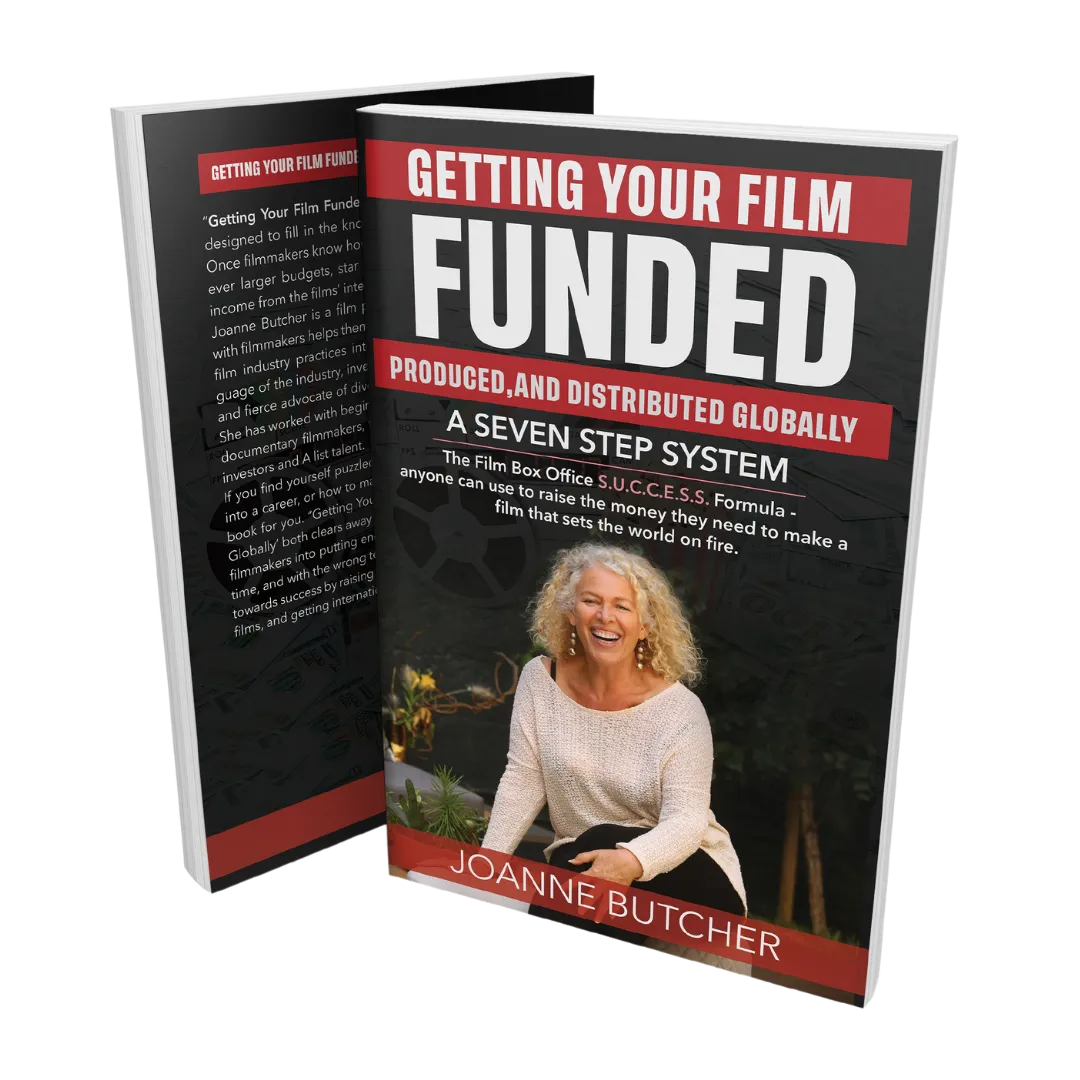
Do you want the secret to getting you film funded?
Inside this book I will reveal the answers to all your questions, the secrets to getting your film funded & distributed globally. After reading this book you will have the knowledge and tools the raise the money you need to make a film that sets the world on fire! This is my 'Film Box Office S.U.C.C.E.S.S Formula' Click the button below to start your journey to film funding success...

POWERED BY:

DESIGNED BY: