
FILMMAKER SUCCESS BLOGS
Explore expert insights on the business of filmmaking, including film funding, marketing, and distribution, and career strategy for independent filmmakers.

Film Budget Breakdown 2026: What Investors Really Want to See (Before They Write the Check)
Film Budget Breakdown 2026: What Investors Really Want to See (Before They Write the Check)
Here's the hard truth about film financing that nobody tells you at film school: investors don't reject your project because your budget is wrong. They reject it because your budget tells them you don't understand the business of filmmaking.
And that's where I come in.
After guiding filmmakers through film funding for nearly a decade, with 25 features in distribution and 150+ in development, I can tell you exactly what investors are thinking when they flip through your budget. They're not just looking at numbers. They're looking at YOU. Are you someone they can trust with their money?
Your film budget breakdown is your first business handshake. It's your chance to prove you're not just a creative dreamer (though that's important too!)... you're a strategic filmmaker who understands how money actually works in this industry.
It's Not About the Numbers, It's About the STRATEGY
Let me share something I call Strategy over Willpower.
Most filmmakers think raising money for a film is about passion, persistence, and sheer determination. They believe that if they just work harder, hustle longer, and believe more strongly, the money will come.
Wrong.
Film funding isn't won through willpower alone. It's won through strategy. And your budget? That's where your strategy lives.
When an investor looks at your budget, they're asking themselves:
Does this filmmaker understand what they're actually building?
Have they thought through the risks?
Do they know what success actually costs?
Can I trust them not to blow through my money in week three of production?
Your job isn't just to list costs. It's to demonstrate strategic thinking through every line item.

The Four Categories Investors Actually Scrutinize
Let's talk about what a professional film budget breakdown looks like in 2026. Investors expect to see four clearly defined categories, and if any of these are missing or underdeveloped, that's an instant red flag.
1. Above-the-Line Costs (30-35% of Your Budget)
This is your creative leadership: writers, directors, producers, and key cast. Above-the-line tells investors whether you have the talent to actually pull this off.
But here's what separates the pros from the amateurs: justification. Don't just list an actor's salary. Show why that person adds value. Are they bankable? Do they bring an audience? Have they delivered ROI on previous projects?
Investors want to see that you're thinking about return, not just creative ego.
2. Below-the-Line Production Expenses (25-30%)
This is where the rubber meets the road: your crew, equipment, locations, sets, costumes, props, transportation, catering... the entire operational machine.
In 2026, investors are particularly focused on department head salaries and equipment rental costs. Major productions can spend upwards of $397,080 just on equipment. Location fees can range from $3,970 to $50,000 per day, depending on where you're shooting.
The question investors are asking: Have you actually priced this out, or are you guessing?
Pro tip: If your budget looks like round numbers everywhere, that screams "I made this up." Real budgets have specificity. $47,850, not $50,000.
3. Post-Production (20-25%)
This category has become absolutely CRITICAL in 2026. Editing, sound design, color correction, visual effects, music licensing, final mix...
Here's what I see filmmakers miss constantly: investors know that special effects and post work are major cost drivers right now. Audiences expect a certain level of polish. If your post-production budget feels thin, investors will assume you either don't understand modern filmmaking standards or you're setting yourself up to come back begging for more money later.
Neither is a good look.

4. Contingency Reserves (10-15%), The Line That Separates Amateurs from Pros
Want to know the FASTEST way to tell an investor you're not serious?
Leave out contingency.
Following the 2023 labor strikes, schedule disruption and rising insurance costs have become major pressure points. Professional producers now budget 10-15% contingency as a standard practice. This isn't "extra money for fun stuff." This is your risk management strategy on paper.
When investors see a proper contingency line, they think: "This filmmaker understands Murphy's Law. They've planned for problems. They're not going to panic and freeze production the first time something goes wrong."
That's the filmmaker who gets the check.
What About Marketing and Distribution Costs?
Here's where strategy really separates the winners from the "I'll figure it out later" crowd.
Most indie filmmakers focus 100% of their energy on the production budget. But here's the brutal math: a film that costs $300 million to produce typically needs $427.8 million in box office returns just to break even. Why? Because theaters take approximately 50% of ticket sales, and marketing budgets often add 50-150% to your production costs.
Even on the indie level, investors want to see that you've thought about film distribution strategy. They want to know:
How will people actually FIND this film?
What's your marketing budget?
Have you allocated funds for festival submissions?
What about deliverables for distributors?
PR? Social media? Influencer partnerships?
If you haven't budgeted for marketing and distribution, you're essentially telling investors: "I'm making a film that nobody will ever see."
Not exactly compelling.

The Professionalism Test: How Detailed Is Your Budget?
Here's something that might surprise you: professional budgets can exceed 130 pages.
That's not a typo.
Real budgets aren't three-page spreadsheets with vague categories. They're detailed, line-item documents that reflect meticulous cost accounting. Every department. Every week of production. Every piece of equipment. Every meal.
Now, do I expect you to hand a 130-page budget to an investor in your first meeting? No. But you SHOULD have that level of detail prepared for due diligence. When an investor gets serious and says, "Show me the full breakdown," you need to be ready.
Because here's what they're really asking: "Have you done the work, or are you winging it?"
The Harsh Reality: Less Than 4% of Films Share Financial Data
One challenge you'll face in 2026? The film industry has largely stopped sharing production budgets publicly. Less than 4% of movies have any public financial data available, making comparable benchmarks scarce for new projects.
This is actually WHY investors rely so heavily on YOUR strategic thinking. They can't just Google "average budget for indie thriller" and fact-check your numbers. They need to trust that YOU'VE done your homework, researched crew rates, negotiated vendor quotes, and built a realistic plan.
This is where having an experienced producer or consultant (like, say, someone who's guided 150+ projects through development...) becomes invaluable. You don't have to figure this out alone.

Strategy Over Willpower: The Philosophy That Changes Everything
I truly believe that film financing success comes down to replacing hope and guesswork with proven strategy.
Your budget isn't just a financial document. It's a strategic blueprint that shows investors:
✓ You understand the true cost of filmmaking ✓ You've planned for risks and contingencies ✓ You know how money flows in and out of a production ✓ You're thinking about ROI, not just artistic vision ✓ You're someone they can trust with six, seven, or eight figures
When you approach raising money for film with strategy instead of just willpower, everything changes. You stop chasing. You start attracting. You become the filmmaker investors WANT to work with.
What Investors Really Want to See (The Short Version)
Let me break this down B.U.L.L.E.T.P.R.O.O.F.:
B - Budget categories clearly defined (ATL, BTL, Post, Contingency)
U - Understanding of profitability math (not just production costs)
L - Line-item specificity (real numbers, not guesses)
L - Long-term thinking (marketing and distribution included)
E - Evidence of research (actual vendor quotes and crew rates)
T - Trust signals (contingency, insurance, risk management)
P - Professional presentation (detailed backup documentation)
R - ROI awareness (you understand it's a business investment)
O - Organized structure (easy to read and navigate)
O - Openness to questions (your budget invites conversation)
F - Forward-thinking strategy (you've planned beyond production)
Ready to Build an Investor-Ready Budget?
Look, I get it. Film budget breakdown work isn't the sexy part of filmmaking. It's not the reason you fell in love with cinema. You want to be on set directing actors, not in a spreadsheet calculating catering costs.
But here's the truth: the filmmakers who master the business side are the ones who actually get to make their films.
And that's where I come in.
If you're ready to replace hope with strategy, if you're ready to build a budget that actually attracts investors instead of scaring them away, if you're ready to finally understand the business side of this beautiful industry...
Because your film deserves to get made, your story deserves to be told. And investors deserve to see that you're the strategic, professional filmmaker who can actually deliver.
Make Movies. Make Money. Make the World a Better Place.
That's not just a tagline. That's the strategy that works.

Filmmaker Success Blogs
Explore expert insights on the business of filmmaking, including film funding, marketing, and distribution, and career strategy for independent filmmakers.
Film Budget Breakdown 2026: What Investors Really Want to See (Before They Write the Check)
Film Budget Breakdown 2026: What Investors Really Want to See (Before They Write the Check)
Here's the hard truth about film financing that nobody tells you at film school: investors don't reject your project because your budget is wrong. They reject it because your budget tells them you don't understand the business of filmmaking.
And that's where I come in.
After guiding filmmakers through film funding for nearly a decade, with 25 features in distribution and 150+ in development, I can tell you exactly what investors are thinking when they flip through your budget. They're not just looking at numbers. They're looking at YOU. Are you someone they can trust with their money?
Your film budget breakdown is your first business handshake. It's your chance to prove you're not just a creative dreamer (though that's important too!)... you're a strategic filmmaker who understands how money actually works in this industry.
It's Not About the Numbers, It's About the STRATEGY
Let me share something I call Strategy over Willpower.
Most filmmakers think raising money for a film is about passion, persistence, and sheer determination. They believe that if they just work harder, hustle longer, and believe more strongly, the money will come.
Wrong.
Film funding isn't won through willpower alone. It's won through strategy. And your budget? That's where your strategy lives.
When an investor looks at your budget, they're asking themselves:
Does this filmmaker understand what they're actually building?
Have they thought through the risks?
Do they know what success actually costs?
Can I trust them not to blow through my money in week three of production?
Your job isn't just to list costs. It's to demonstrate strategic thinking through every line item.
The Four Categories Investors Actually Scrutinize
Let's talk about what a professional film budget breakdown looks like in 2026. Investors expect to see four clearly defined categories, and if any of these are missing or underdeveloped, that's an instant red flag.
1. Above-the-Line Costs (30-35% of Your Budget)
This is your creative leadership: writers, directors, producers, and key cast. Above-the-line tells investors whether you have the talent to actually pull this off.
But here's what separates the pros from the amateurs: justification. Don't just list an actor's salary. Show why that person adds value. Are they bankable? Do they bring an audience? Have they delivered ROI on previous projects?
Investors want to see that you're thinking about return, not just creative ego.
2. Below-the-Line Production Expenses (25-30%)
This is where the rubber meets the road: your crew, equipment, locations, sets, costumes, props, transportation, catering... the entire operational machine.
In 2026, investors are particularly focused on department head salaries and equipment rental costs. Major productions can spend upwards of $397,080 just on equipment. Location fees can range from $3,970 to $50,000 per day, depending on where you're shooting.
The question investors are asking: Have you actually priced this out, or are you guessing?
Pro tip: If your budget looks like round numbers everywhere, that screams "I made this up." Real budgets have specificity. $47,850, not $50,000.
3. Post-Production (20-25%)
This category has become absolutely CRITICAL in 2026. Editing, sound design, color correction, visual effects, music licensing, final mix...
Here's what I see filmmakers miss constantly: investors know that special effects and post work are major cost drivers right now. Audiences expect a certain level of polish. If your post-production budget feels thin, investors will assume you either don't understand modern filmmaking standards or you're setting yourself up to come back begging for more money later.
Neither is a good look.
4. Contingency Reserves (10-15%), The Line That Separates Amateurs from Pros
Want to know the FASTEST way to tell an investor you're not serious?
Leave out contingency.
Following the 2023 labor strikes, schedule disruption and rising insurance costs have become major pressure points. Professional producers now budget 10-15% contingency as a standard practice. This isn't "extra money for fun stuff." This is your risk management strategy on paper.
When investors see a proper contingency line, they think: "This filmmaker understands Murphy's Law. They've planned for problems. They're not going to panic and freeze production the first time something goes wrong."
That's the filmmaker who gets the check.
What About Marketing and Distribution Costs?
Here's where strategy really separates the winners from the "I'll figure it out later" crowd.
Most indie filmmakers focus 100% of their energy on the production budget. But here's the brutal math: a film that costs $300 million to produce typically needs $427.8 million in box office returns just to break even. Why? Because theaters take approximately 50% of ticket sales, and marketing budgets often add 50-150% to your production costs.
Even on the indie level, investors want to see that you've thought about film distribution strategy. They want to know:
How will people actually FIND this film?
What's your marketing budget?
Have you allocated funds for festival submissions?
What about deliverables for distributors?
PR? Social media? Influencer partnerships?
If you haven't budgeted for marketing and distribution, you're essentially telling investors: "I'm making a film that nobody will ever see."
Not exactly compelling.
The Professionalism Test: How Detailed Is Your Budget?
Here's something that might surprise you: professional budgets can exceed 130 pages.
That's not a typo.
Real budgets aren't three-page spreadsheets with vague categories. They're detailed, line-item documents that reflect meticulous cost accounting. Every department. Every week of production. Every piece of equipment. Every meal.
Now, do I expect you to hand a 130-page budget to an investor in your first meeting? No. But you SHOULD have that level of detail prepared for due diligence. When an investor gets serious and says, "Show me the full breakdown," you need to be ready.
Because here's what they're really asking: "Have you done the work, or are you winging it?"
The Harsh Reality: Less Than 4% of Films Share Financial Data
One challenge you'll face in 2026? The film industry has largely stopped sharing production budgets publicly. Less than 4% of movies have any public financial data available, making comparable benchmarks scarce for new projects.
This is actually WHY investors rely so heavily on YOUR strategic thinking. They can't just Google "average budget for indie thriller" and fact-check your numbers. They need to trust that YOU'VE done your homework, researched crew rates, negotiated vendor quotes, and built a realistic plan.
This is where having an experienced producer or consultant (like, say, someone who's guided 150+ projects through development...) becomes invaluable. You don't have to figure this out alone.
Strategy Over Willpower: The Philosophy That Changes Everything
I truly believe that film financing success comes down to replacing hope and guesswork with proven strategy.
Your budget isn't just a financial document. It's a strategic blueprint that shows investors:
✓ You understand the true cost of filmmaking ✓ You've planned for risks and contingencies ✓ You know how money flows in and out of a production ✓ You're thinking about ROI, not just artistic vision ✓ You're someone they can trust with six, seven, or eight figures
When you approach raising money for film with strategy instead of just willpower, everything changes. You stop chasing. You start attracting. You become the filmmaker investors WANT to work with.
What Investors Really Want to See (The Short Version)
Let me break this down B.U.L.L.E.T.P.R.O.O.F.:
B - Budget categories clearly defined (ATL, BTL, Post, Contingency)
U - Understanding of profitability math (not just production costs)
L - Line-item specificity (real numbers, not guesses)
L - Long-term thinking (marketing and distribution included)
E - Evidence of research (actual vendor quotes and crew rates)
T - Trust signals (contingency, insurance, risk management)
P - Professional presentation (detailed backup documentation)
R - ROI awareness (you understand it's a business investment)
O - Organized structure (easy to read and navigate)
O - Openness to questions (your budget invites conversation)
F - Forward-thinking strategy (you've planned beyond production)
Ready to Build an Investor-Ready Budget?
Look, I get it. Film budget breakdown work isn't the sexy part of filmmaking. It's not the reason you fell in love with cinema. You want to be on set directing actors, not in a spreadsheet calculating catering costs.
But here's the truth: the filmmakers who master the business side are the ones who actually get to make their films.
And that's where I come in.
If you're ready to replace hope with strategy, if you're ready to build a budget that actually attracts investors instead of scaring them away, if you're ready to finally understand the business side of this beautiful industry...
Because your film deserves to get made, your story deserves to be told. And investors deserve to see that you're the strategic, professional filmmaker who can actually deliver.
Make Movies. Make Money. Make the World a Better Place.
That's not just a tagline. That's the strategy that works.
"Are you ready to take a leap of faith and make the film you've been dreaming of making?
Have you given any thought to how to make your films financially viable? Profitable?
Is it time to finally tell the story you were always meant to tell?
Make Movies. Make Money. Make the World a Better Place.
Filmmakers are the most creative people in the world. Whether you write, produce, direct, act, compose scores, storyboard (the list goes on!), I truly believe that you have a unique story to tell and that that story can change the world.
Where I most often see independent filmmakers (second and third feature filmmakers
not excluded) struggle, though, is in turning that creativity into a well-made, successful, and financially viable film.
And that's where I come in.
With my experience in marketing, fundraising, and producing, I have guided clients through writing Nicholl's award-winning scripts, raising hundreds of thousands of dollars, producing the films they've always dreamed of, and transforming their overall thought processes around creating.
My clients currently have 25 films in distribution, with 15 more on the way later this year. Others have nationwide programming on PBS, and many are working on internationally produced documentary and narrative feature films.

The struggle is OVER, after reading this book the path to funding your first Block Buster will be CLEAR!
Make Movies. Make Money. Make the World a Better Place.
Filmmakers are the most creative people in the world. Whether you write, produce, direct, act, compose scores, storyboard (the list goes on!), I truly believe that you have a unique story to tell and that that story can change the world.
Where I most often see independent filmmakers (second and third
feature filmmakers not excluded) struggle, though, is in turning that creativity into a well-made, successful, and financially viable film.
And that's where I come in.
With my experience in marketing, fundraising, and producing, I have guided clients through writing Nicholl's award-winning scripts, raising hundreds of thousands of dollars, producing the films they've always dreamed of, and transforming their overall thought processes around creating.
My clients currently have 25 films in distribution, with 15 more on the way later this year. Others have nationwide programming on PBS, and many are working on internationally produced documentary and narrative feature films.
My B.U.L.L.E.T.P.R.O.O.F coaching program helps you HEAL from a lifetime of NARCISISTIC ABUSE.
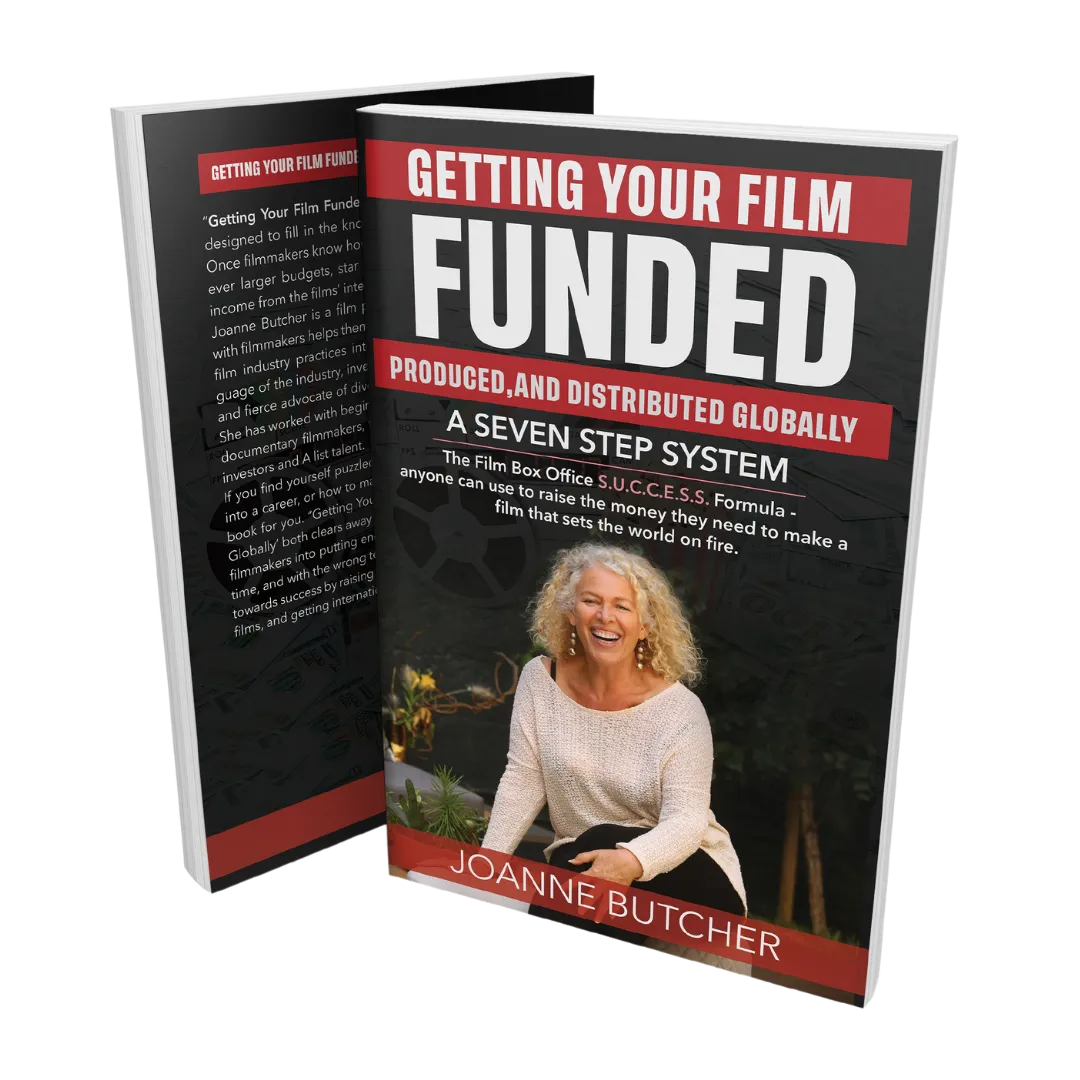
Do you want the secret to getting you film funded?
Inside this book I will reveal the answers to all your questions, the secrets to getting your film funded & distributed globally. After reading this book you will have the knowledge and tools the raise the money you need to make a film that sets the world on fire! This is my 'Film Box Office S.U.C.C.E.S.S Formula' Click the button below to start your journey to film funding success...


POWERED BY:

DESIGNED BY: